
Evaluating the Total Cost of Ownership
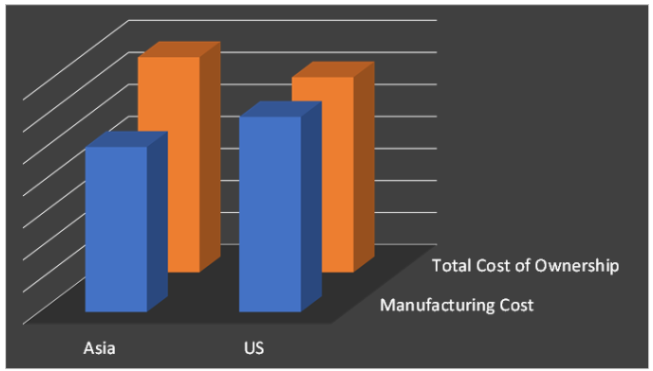
Reshoring seems simple: bring manufacturing back home. The counterargument—offshoring saves money—is also simple, and for decades has been perceived as a winner. Reality lies somewhere in between, as the total cost of ownership needs to be considered, including intangibles.
Conceding for the moment that there is real cost savings from low–cost offshore labor, let’s look at the other factors that influence the total cost of ownership.
Tariffs
Much has been made about this recently, so we won’t dive too deep into this, but remember this can apply at every level of the supply chain
Freight
Both inbound and outbound, to the customer. This includes the actual transport costs, but also all the other costs associated with transportation. It also really depends on mode —surface, sea or air.
Automation
This is the great equalizer for labor costs, but has a significant ROI aspect that has to be addressed in cost of ownership
Parts & Materials
The cost for most products are driven much more by the cost of the bill of materials than the cost of labor. To first order, this is independent of assembly location, but second order effects are common (e.g. sub supply chains, where do the materials and labor for the parts come from?)
Attrition
Yield and scrap are the most common forms of attrition, but some manufacturing processes have built-in attrition. This is related to quality, which can vary by region, but also ties to the supply chain and even automation (oftentimes the true benefit of automation isn’t labor cost reductions rather consistency and tolerances)
Overhead
Especially for lower volume products, this can be the real difference-maker in terms of reshoring vs offshoring. How many people on how many airplanes to set up and manage an offshore supply chain can swamp piece part savings
Intangibles are also important, although tougher to quantify
Patriotism
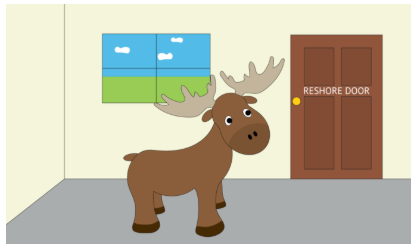
This is the moose in the room for any discussion of reshoring, the kneejerk reaction of “build it here, in my country/state/ town.” This of course has local merit, but can lead to emotional rather than logical decisions. This isn’t the forum for that aspect, enough said.
Branding
Related to patriotism, but more tangible. Does Made in USA (or for that matter Made in Germany) add value to a brand? Not our area of expertise, but valid.
Supply Chain
Supply chains are called chains for a reason, and how those chains splay out around the globe matters. In general, the shorter the supply chain the better—a molder on the same campus as the resin compounder (their supplier) and the contract manufacturer (their customer) has a huge advantage over a supply chain where all three are on different continents.
Cost of Money
There is a real cost to carrying inventory, whether on the water or in warehouses or in WIP (work in progress) on an assembly line.
Agility
The shorter the overall supply chain, the easier it is for a company to be agile, change product mix based on demand shifts, new markets opening, or competition. This is often the strongest argument for reshoring, as a short, domestic supply chain can dramatically improve agility
Management Focus
If your CEO is spending all their time on midnight conference calls with a recalcitrant Asian supplier, is that really why they makes the big bucks?
Risks
- IP risk is obvious and real
- Global risks are on people’s minds at the moment, from pandemics to politics or war, famine, labor unrest or whatever
- Other risks include boring things like getting products through customs or shipping damage
- Yes, insurance can cover some risk, but at a cost, and doesn’t cover intangibles like brand damage
While every product and situation are different, in general a total cost of ownership can (and should!) be modeled. This needs to include ROI, risk, cost of money, and intangibles. Then various solutions can be compared and the tradeoffs weighed in order to allow a data-driven decision. Zebulon Solutions can help both with the modeling of the various options as well as managing the actual transitions to the location on the planet (for now) you choose to manufacture.